


A Day in the Life of Extension Featuring Dr. Yeshi Wamishe
- extensioncommittee

- Jul 20, 2020
- 4 min read
This week we are featuring Dr. Yeshi Wamishe of the University of Arkansas System Division of Agriculture Cooperative Extension Services on our "A Day in the Life of Extension" blog! Go Razorbacks!
Dr. Wamishe is an Associate Professor and Extension Plant Pathologist with 9 years of experience working with rice.
A typical year in Dr. Wamishe's life looks like this:
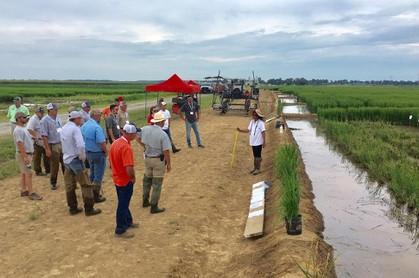
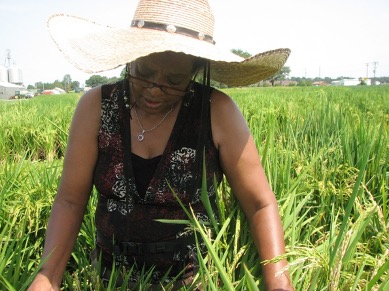
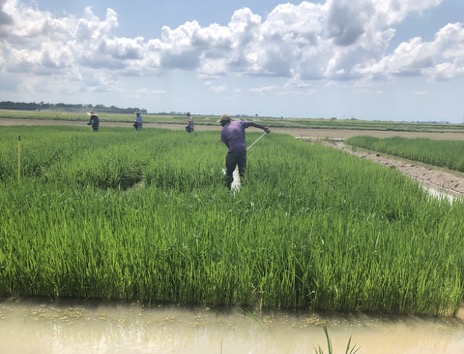
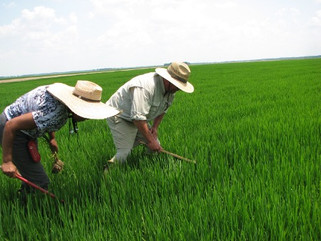
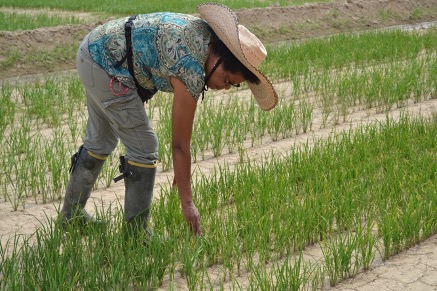
I have been working 100% in extension conducting applied research, extension education and leading the Extension Rice Pathology Program. Late spring to early fall is the crop season and it is real interesting-- conducting applied field research, traveling across the state to visit commercial fields, talking to consultants and rice producers, diagnosing diseases on site, from pictures and several samples sent to our laboratory, providing management options, offering a one-to-one and group hands-on training to agricultural agents and consultants, writing blog and newsletter articles, preparation for field days and more. Our applied research includes both funded projects and evaluation of chemical products. The latter are carried out in collaboration with industries. As a result, we produce a lot of inoculum in our laboratory depending on the disease type. Because we are working on different diseases, we should be able to create adequate conditions for each disease starting from selection of timing for planting. Due to the scattered planting dates our field season is often long. We get to the field early and we get out late in the season. In some seasons, the research needs to be carried out at different locations requiring us to be transporting farm equipment such as the drill planter to plant and Mud Master for fungicides application. The diseases we often work on include blast, sheath blight, kernel smut, false smut, and bacterial panicle blight among others. We always have some tests in the greenhouse throughout the year. Most of the greenhouse work is in the summer due to the need for long day light for rice. We evaluate hundreds of breeding lines in the greenhouse. The same materials are tested in the field for later season blast. Throughout the year, we often run preliminary and sometimes full-fledged research in our laboratory and greenhouse. In normal years (non-COVID years), field days, scouting schools, IPM meetings, summer agri-agents and consultant trainings such as Rice College, teaching graduate students (often as a guest) are some of the other outreach activities we carry on during the summer. As the only extension pathologist working fully on rice, I and my team also work closely with rice breeders evaluating their materials and the Uniform Rice Regional Nursery at our center. We have Prep (producers rice evaluation program) planted by our agronomist at 10 locations at farmers’ fields and ARPT (Arkansas Rice Performance Test) at 5 locations across the state that I collect disease data to provide feedback on varieties to rice producers. Working for extended hours is routine and getting home late on the days I travel to northeast Arkansas and further south is quite normal to my family. During off summer, writing research proposals for funding, presentation preparation for production and professional meetings, data analysis, and report writing are a few examples of what I do in the office. Committee service to my department, the Division or the university, and reviewing journal papers to peers also share the busy schedule in the main season and off-season. In the last nine years, there was not a day to do nothing. Busy is a relative term. Extension makes every day real busy. So, one has to be a multi-tasker and focused.
What is the most rewarding thing about working in Extension? A feeling of accomplishment and hence, satisfaction in seeing the impact we make on agriculture and the difference in people’s life. After I started my career in Agriculture, my philosophy has been, if nobody works in agriculture, I should because we all need to eat for life to continue.
What is the most challenging thing about working in Extension? Time is never enough.
Dr. Wamishe's advice to young scientists considering a career in Extension: Once you start with extension, you love it more every day. Nature is interesting! Weather is more interesting! Whenever you eat, you will appreciate your food and be thankful. Your respect to farmers rises up since you will have first-hand information on the financial, physical and emotional stress they go through to produce food crops. You may have the ambition to be successful and be happy in your profession. I concur with this quote “Success is not the key to happiness. Happiness is the key to success. If you love what you are doing, you will be successful." -- Albert Schweitzer
How do you use social media in your Extension program? English is not my first language. I prefer taking time checking my English language and the facts before my educational materials hit my audience. I like to use a blog, and online newsletter to convey my message. However, I share pathology information with my extension colleagues (mostly the rice agronomist) to convey the message in social media I do not use. In extension, we work as a team. Field problems are not related only to pathology. They are complex and we have to work hand-in-hand with the agronomist, entomologist, weed scientist and nutritionist for correct identification of the problem. Guessing wrong can be costly to producers.
What is your favorite plant disease? I do not like any of the diseases. I like the crops. I consider disease pathogens as the enemies of my favorite crop, currently rice. I work on all major rice diseases. However, working on sheath blight is much easier.
We would like to thank Dr. Wamishe for her participation in our "A Day in the Life of Extension" feature! Check out the Arkansas Row Crop Blog, and the University of Arkansas Division of Agriculture - Extension Twitter (@UAEX_edu), Instagram (@uaex_edu), or Facebook accounts for more!











Comments